Amir Powell · 10 October 2026
Seasonal Bird Migrations Drive Unique Plant Dispersal Patterns Across Isolated Valley Ecosystems Through Repeated Cycles of Seed Transport and Habitat Renewal
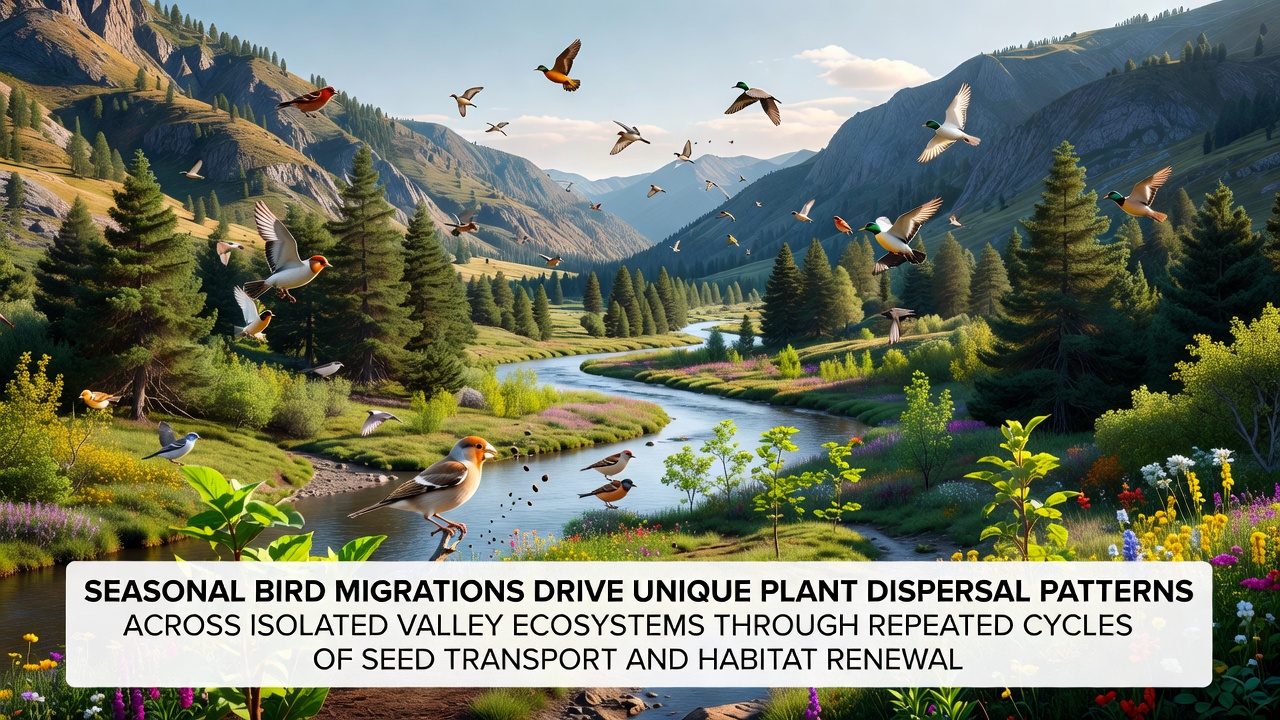
Seasonal bird migrations connect distant habitats as species travel along established flyways that cross isolated valley systems, carrying seeds attached to feathers or ingested in digestive tracts before deposition in new locations; these movements repeat each year and create consistent patterns of plant dispersal that researchers track through banding studies and genetic sampling. Data from long-term monitoring programs show that birds such as thrushes and finches transport viable seeds across barriers that limit other dispersal agents, allowing plant populations to establish in valleys separated by ridges and rivers.
Mechanics of Seed Transport During Migration
Migratory species follow routes timed to seasonal changes in food availability and weather, stopping at valley sites where they rest and feed; seeds adhere to plumage during these pauses or pass through the gut after consumption of fruits, then fall to the ground in fecal matter that provides initial nutrients for germination. Studies conducted by the US Fish and Wildlife Service document how frugivorous birds deposit seeds from distant source populations, increasing genetic diversity in recipient valleys where local plants otherwise remain isolated. Observers note that passage timing aligns with fruiting periods of specific plant species, which maximizes the number of seeds moved during each cycle.
Patterns Observed in Isolated Valley Ecosystems
Isolated valleys receive repeated seed inputs from north-south and east-west flyways, resulting in plant communities that contain species otherwise restricted to other regions; repeated cycles allow pioneer plants to colonize disturbed soils while later arrivals fill niches created by earlier growth. Research indicates that valleys positioned along major corridors exhibit higher rates of plant turnover compared with those farther from migration paths, as measured by annual vegetation surveys that record new seedlings and shifts in species composition. As of October 2026, satellite tracking data continue to refine maps of these corridors, revealing how small adjustments in stopover sites influence dispersal distances and success rates.
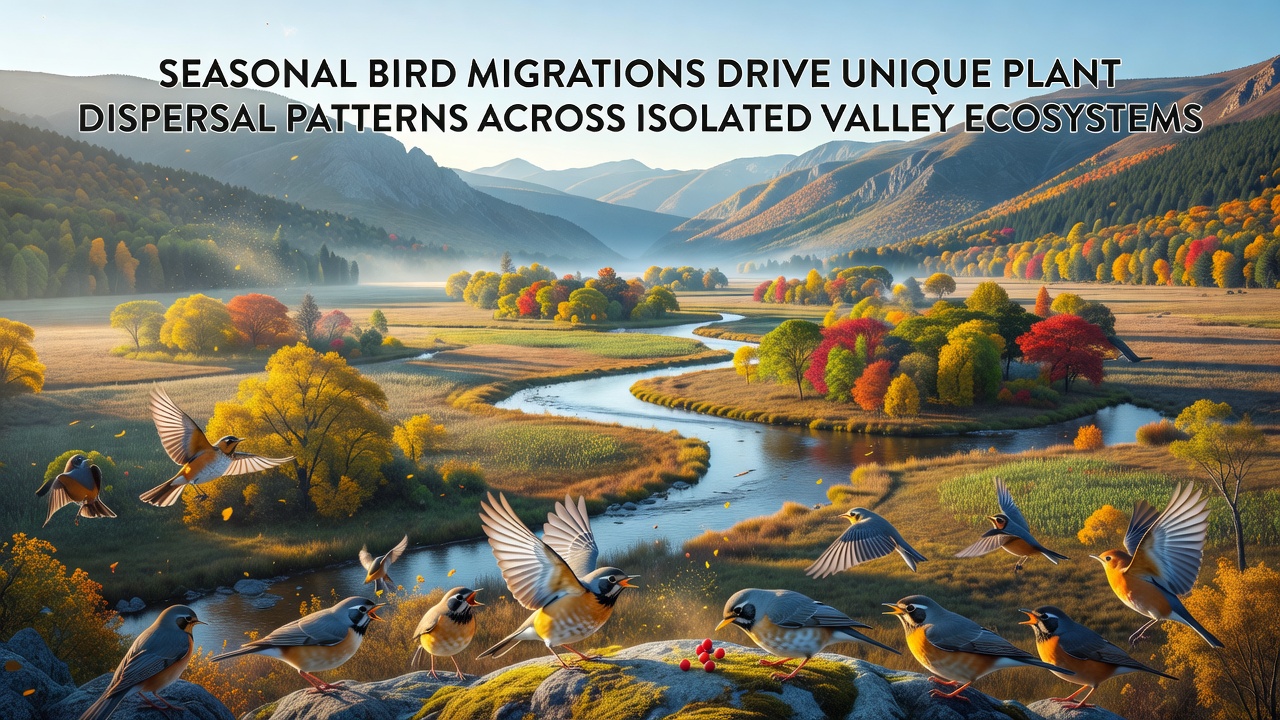
Habitat renewal follows each migration wave when deposited seeds germinate and mature plants stabilize soils, reduce erosion, and create microhabitats that support additional species; this process repeats across years because the same bird populations return along identical routes. Evidence from field experiments demonstrates that exclusion of birds from experimental plots reduces seedling recruitment, confirming the role of migration in maintaining plant cover where other dispersal vectors remain limited.
Role of Repeated Cycles in Long-Term Ecosystem Dynamics
Each annual cycle reinforces previous dispersal events because surviving plants produce seeds that subsequent generations of migrants carry onward or that remain in place to expand local stands; genetic analyses reveal shared lineages between valley populations separated by hundreds of kilometers, consistent with ongoing bird-mediated exchange. Reports from the European Environmental Agency highlight similar patterns in mountain valleys where migratory passerines link lowland and alpine plant communities through successive seasons of transport. These cycles also buffer against localized disturbances such as landslides or flooding, since fresh seed arrivals replenish lost vegetation without requiring external human intervention.
Climate records show that shifts in migration timing affect dispersal windows, yet core flyways persist because birds respond to photoperiod cues that remain stable even as temperatures vary. Monitoring networks record the arrival and departure dates of key species, allowing ecologists to correlate seed deposition rates with observed plant establishment across multiple valleys.
Supporting Evidence from Field Research
Long-term banding programs and stable isotope analysis of feathers provide direct links between specific bird individuals and the geographic origins of seeds they carry; one multi-year project tracked thrush movements through several valley systems and matched seed genotypes to source forests hundreds of kilometers away. Data collected by university research teams indicate that dispersal success varies with bird abundance, stopover duration, and fruit availability, yet the overall effect remains consistent across decades of observation. These findings align with broader surveys conducted by Environment and Climate Change Canada that document plant range expansions along known migratory corridors.
Conclusion
Seasonal bird migrations sustain plant dispersal across isolated valleys by delivering seeds through repeated annual cycles that promote habitat renewal and maintain ecological connections between otherwise separated sites. Ongoing monitoring through October 2026 and beyond continues to quantify these contributions using tracking technology and vegetation surveys that capture both immediate seed deposition and longer-term community changes. The documented patterns demonstrate how animal movement serves as a persistent driver of botanical distribution in fragmented landscapes where other mechanisms prove insufficient.